







































Entryway Bench Ideas: Size, Storage and Layout for a Better Welcome
An entryway bench earns its place when it makes the daily handoff easier: sit to put on shoes, set down a bag, and keep the route to the door clear. The best choice starts with the floor plan, not a style label. Measure the wall, the door swing, and the walking path before you pick a bench.

Start with the space around the bench
Mark the proposed bench footprint on the floor with painter’s tape. Open the front door fully, walk through carrying a bag, and pull out any nearby drawers. A bench can fit the wall and still make the entry feel pinched if its depth interrupts that route. Leave enough room for someone to sit while another person passes; the right clearance depends on your actual hallway and door swing.
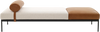
Look beyond overall length. A shallow profile can matter more than saving a few inches of width in a narrow hall. The Georg Bench, for example, measures 49 inches long, 15 inches deep and 18 inches high. Its open frame keeps the floor visible, a useful visual choice when the entry shares space with a living room.
Choose the job before the material
For a small, busy entry
Decide where shoes and bags will go before buying a seat. An open bench makes footwear easy to reach, but it will also keep that footwear in view. If you want a cleaner look, plan a basket, cabinet or wall hooks as a separate part of the arrangement. Do not assume every bench includes concealed storage.
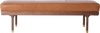
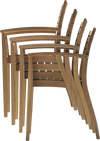
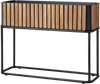
The slatted Skagerak Cutter Bench 48" is another open option. HORNE lists it at 48 inches wide, 15.5 inches deep and 17 inches high. Those dimensions make it easy to compare against a taped outline at home; check the product page for the current wood and availability options.
For an entry that opens into the living room
Let the bench repeat one existing material, such as the tone of a table or a nearby frame, without trying to match every finish. A light oak seat can feel quiet against a pale wall, while a darker wood can give the entrance a clear stopping point. If the room already has several small pieces, keep the bench styling restrained: one cushion or one tray nearby usually does more than a row of objects on the seat.
Make the landing zone work
Place a hook or rail where a coat can be reached from the bench, and give keys one consistent home. For shoes, count the pairs that actually live by the door; that number tells you whether an open shelf, a basket or closed storage is realistic. A washable mat in front of the seat handles the wet-shoe moment without asking the bench finish to do the work.
If children use the space, test the arrangement at their height. The simplest setup is often a seat they can reach, a hook they can use, and one defined place for shoes. In a tight apartment entry, a bench may be too much furniture; a wall hook and a single chair elsewhere can be the better answer.
A quick measurement checklist
- Measure wall length, baseboards and any outlet or heat vent.
- Check bench depth against the clear walking path and full door swing.
- Compare seat height with the people who will use it to put on shoes.
- Decide whether visible shoes fit the look you want.
- Confirm material, lead time and care details on the product page before ordering.
Explore the Georg Bench and Skagerak Cutter Bench as two different open-seat starting points. The right entryway bench is the one that leaves the door easy to use and gives your everyday things a clear place to land.


